Airside Labs - AI Security Testing and Compliance
    Beyond Line of Sight: The Infrastructure Drones Need to Fly
    Newsletter

    Never miss an episode

    Get new Travel Tech Podcast episodes, aviation AI insights, and use-case deep dives delivered to your inbox.

    Episode 2
    February 2, 2026

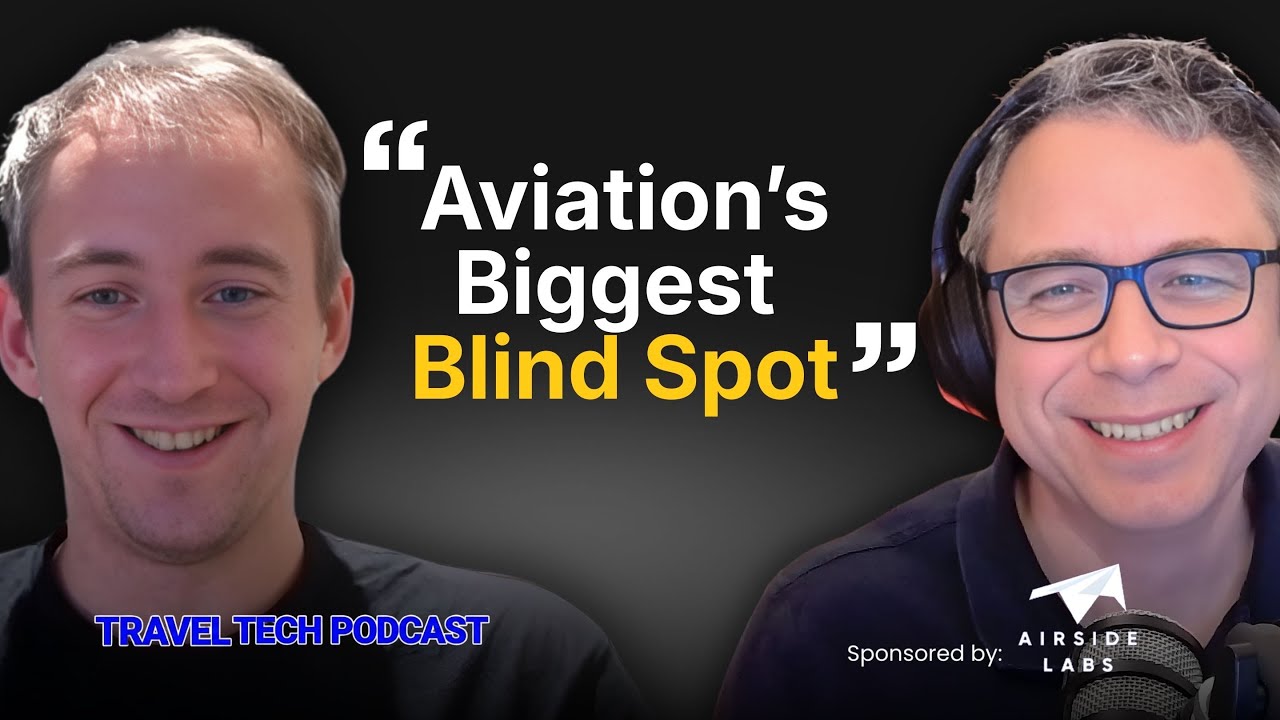
    Beyond Line of Sight: The Infrastructure Drones Need to Fly

    James Dunthorne, Founder of Neuron Innovations and 4DSKY

    Why beyond visual line of sight (BVLOS) drone operations are constrained by surveillance infrastructure and detection physics — not aircraft capability.

    BVLOS Drones
    Airspace Safety
    Sensor Fusion
    Edge Networks

    Show Notes

    James Dunthorne brings expertise spanning collision avoidance research, airspace safety, sensor fusion, and complex projects including parliamentary restoration work. With a PhD in aeronautical engineering, James explains why BVLOS is fundamentally an infrastructure constraint — covering visual airspace safety limitations, low-altitude transponder fragmentation issues, edge networks for safety-critical systems, and the role physical infrastructure plays in enabling AI applications.

    Click to expand the full episode transcript (7,948 words approx.)

    Use cases discussed

    Aviation AI use cases from our catalogue that this conversation touches on.

    Aerospace & Defense

    Intelligent sensor fusion and data integration to provide a comprehensive situational awareness for the UAS pilot.

    James explicitly describes fusing ADS-B, Mode S, FLARM and other transponder types via ground sensor arrays to give drone pilots unified airspace situational awareness.

    Read use case
    Aerospace or Defense Sector

    Airspace monitoring and collision avoidance using AI-powered object detection and tracking.

    Core episode theme: Neuron deploys ground sensors to detect all aircraft types and enable collision avoidance for BVLOS drone operations in mixed low-altitude airspace.

    Read use case
    Government Agency

    Analyze sensor data and flight trajectories using AI algorithms to detect and mitigate potential airspace infringements or conflicts.

    Neuron's system analyses sensor data and aircraft trajectories to detect potential conflicts between BVLOS drones and manned aircraft in real time.

    Read use case
    Air Navigation Service Provider (ANSP)

    Leverage federated learning and edge computing to enable collaborative, privacy-preserving model training across multiple air traffic control centers.

    James explicitly discusses edge network architecture for safety-critical systems to reduce latency and avoid single points of failure versus centralised cloud servers.

    Read use case
    Aviation Regulator/Authority

    Predictive modeling of aircraft trajectories and conflict detection to proactively identify potential safety risks.

    James's PhD research modelled exactly when two aircraft can no longer avoid collision, directly matching predictive trajectory conflict detection for safety-critical systems.

    Read use case
    Aerospace or Defense Sector

    Automated compliance checks to ensure UAS operations adhere to regulatory requirements.

    James describes extensively writing regulatory safety cases and navigating CAA compliance processes to enable BVLOS drone operations beyond the 500m visual line of sight limit.

    Read use case
    Previous Episode

    Ep 1: Jevons Paradox for Knowledge Work

    Next Episode

    Ep 3: This Ex-Pilot Is Building AI for the Cockpit

    Building AI for Aviation?

    Airside Labs helps aviation organisations validate AI systems before deployment. From adversarial testing to compliance evaluation, we bring 25+ years of aviation data expertise to ensure your AI is safe, compliant, and production-ready.

    Book A Demo

    About the Travel Tech Podcast

    Hosted by Alex Brooker, founder of Airside Labs, the Travel Tech Podcast features authentic long-form conversations with leaders, innovators, and startup founders shaping the future of aviation and travel technology. No scripts, no sponsors, no sales pitches — just real conversations about building technology that matters.