
Never miss an episode
Get new Travel Tech Podcast episodes, aviation AI insights, and use-case deep dives delivered to your inbox.
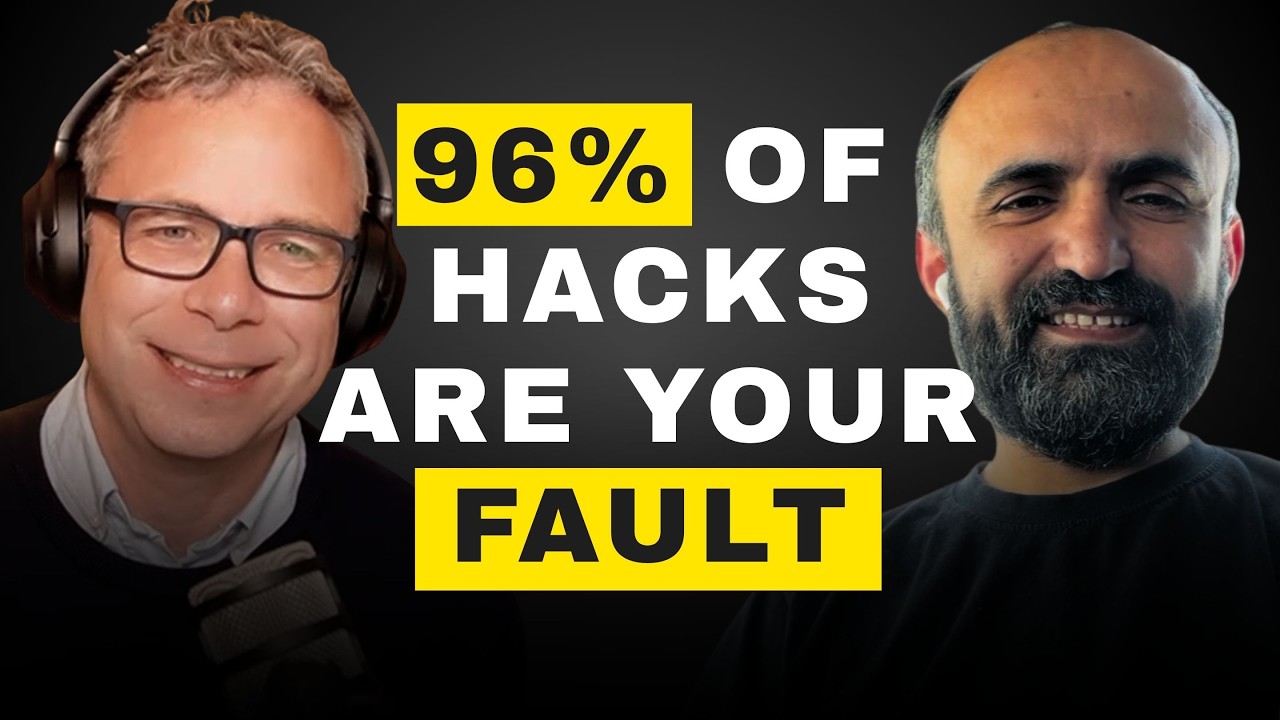
96% Human Error: Why AI Security Starts with the Human, Not the Model
Ninety-six percent of data breaches trace back to human behavior, not model failure — so why does the industry keep hardening the AI while leaving the human untouched? Yagub Rahimov, CEO and founder of Polygraf AI, unpacks how AI agents have created a dangerous new user type in enterprise security, why travel companies are quietly committing serious privacy violations at the gate, and what genuinely secure AI-powered travel infrastructure would actually require.
Show Notes
Yagub Rahimov is CEO and founder of Polygraf AI, a company specialising in behavioural security, contextual privacy, and AI risk management for enterprise clients across defence, financial services, and technology. The conversation opens with a provocation: when a gate agent asks a passenger to recite their passport number aloud in a crowded terminal, the intention may be benign but the security failure is real, and it stands as a microcosm of how the travel industry handles personal data. Rahimov explains why AI agents represent an entirely new category of user in the digital security pyramid — one that carries the same system-level access as a human employee but has never been trained to recognise social engineering or deception — illustrating the risk with examples ranging from prompt-injection attacks on Instagram's support chatbot to North Korean operatives infiltrating enterprise job interviews using glass-screen AI prompting technology. He introduces the concept of mosaic intelligence, the process by which repeated inputs of seemingly anonymised data allow an AI to re-identify individuals through behavioural pattern mapping, and argues that tokenisation — stripping personal data before it reaches a model and reuniting it with processed output — offers a practical remedy. On the commercial side, Rahimov details how real-time behavioural intervention, rather than after-the-fact audit, produced a 72 percent reduction in data-loss-prevention violations for one enterprise client, and how AI-powered quality assurance now allows a single call centre to process 500,000 calls daily at five to ten cents per call, a capability he believes could transform how travel operators monitor customer interactions at scale.
Click to expand the full episode transcript (9,125 words approx.)
Ep 20: You Can't Vibe Code a Tour Operator
Ep 22: Computer Says No: Why Airlines Won't Take Your Upgrade Money
Building AI for Aviation?
Airside Labs helps aviation organisations validate AI systems before deployment. From adversarial testing to compliance evaluation, we bring 25+ years of aviation data expertise to ensure your AI is safe, compliant, and production-ready.
About the Travel Tech Podcast
Hosted by Alex Brooker, founder of Airside Labs, the Travel Tech Podcast features authentic long-form conversations with leaders, innovators, and startup founders shaping the future of aviation and travel technology. No scripts, no sponsors, no sales pitches — just real conversations about building technology that matters.