Never miss an episode
Get new Travel Tech Podcast episodes, aviation AI insights, and use-case deep dives delivered to your inbox.
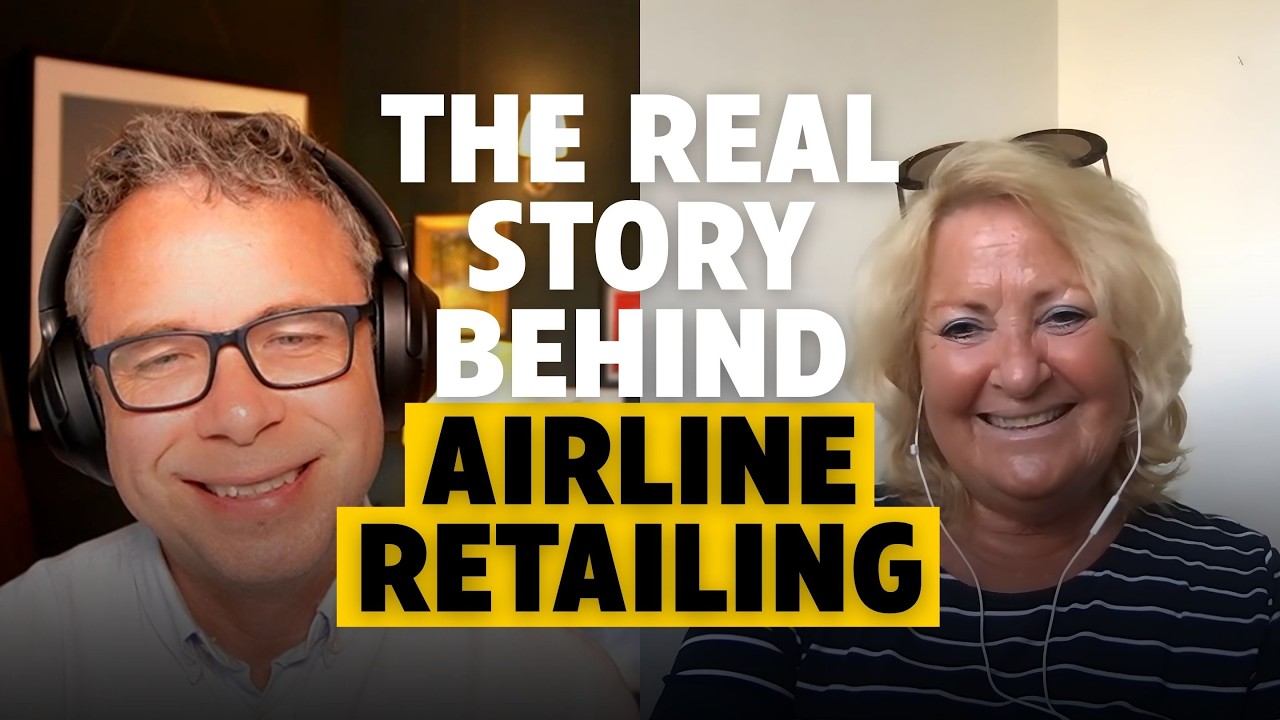
Computer Says No: Why Airlines Won't Take Your Upgrade Money
Airlines have spent a decade trying to modernise their retailing, yet most still cannot change, refund, or even verify what they sell. Ann Cederhall, co-founder of LeapShift and one of the original architects of Lufthansa's NDC Direct Connect, unpacks the structural failures behind that paradox — from a 12-year servicing gap in the NDC standard to billions in annual revenue leakage that nobody can afford to chase.
Show Notes
Ann Cederhall is co-founder of LeapShift, a consultancy specialising in airline retailing, distribution, and commercial strategy, and author of the State of Airline Retailing 2026 report. Her career spans senior roles at Lufthansa, Scandinavian Airlines, Amadeus, and ATPCo — including a front-row seat at ATPCo when IATA received the schema that became NDC, and then hands-on delivery of Lufthansa's original NDC Direct Connect in 2015, the project inseparable from the infamous €16 GDS surcharge. In the conversation she traces how the low-cost carrier revolution of the mid-2000s — cheaper direct distribution and unbundled ancillary selling — forced legacy carriers toward a new standard, and why that standard stalled: airlines could book via NDC from 2012 but could not service those bookings until version 24.1 in 2024, a 12-year gap that gutted commercial viability. Approximately 70 percent of NDC-live airlines remain on version 17.1, and nearly 70 percent operate with no order management system at all, meaning they have no centralised view of what they have sold or what can be changed. The episode also examines ancillary inventory failures — airlines routinely sell seat upgrades and fast-track products with no mechanism to verify availability — and the upgrade opportunity cost created when high-willingness-to-pay moments near departure collide with PNRs held outside the airline's own systems. On AI, Ann draws a sharp line between what agentic tools can genuinely accelerate, such as overnight synthesis of competitor cancellation data for revenue managers, and what they cannot fix, namely shopping engines that have gone 30 years without modernisation and still process 20 million fares to surface a handful of relevant options. The episode closes on revenue leakage: global interline proration disputes cost the industry between $650 million and $3 billion annually, with individual disputes frequently costing more to resolve than the sums at stake.
Click to expand the full episode transcript (8,167 words approx.)
Ep 21: 96% Human Error: Why AI Security Starts with the Human, Not the Model
Ep 23: Travel Inspiration Lives on TikTok. The Booking Still Lives in 47 Browser Tabs.
Building AI for Aviation?
Airside Labs helps aviation organisations validate AI systems before deployment. From adversarial testing to compliance evaluation, we bring 25+ years of aviation data expertise to ensure your AI is safe, compliant, and production-ready.
About the Travel Tech Podcast
Hosted by Alex Brooker, founder of Airside Labs, the Travel Tech Podcast features authentic long-form conversations with leaders, innovators, and startup founders shaping the future of aviation and travel technology. No scripts, no sponsors, no sales pitches — just real conversations about building technology that matters.