
Every episode, in your inbox
One email per Travel Tech Podcast episode: the conversation, the key takeaways and the use cases worth building in aviation and travel AI.
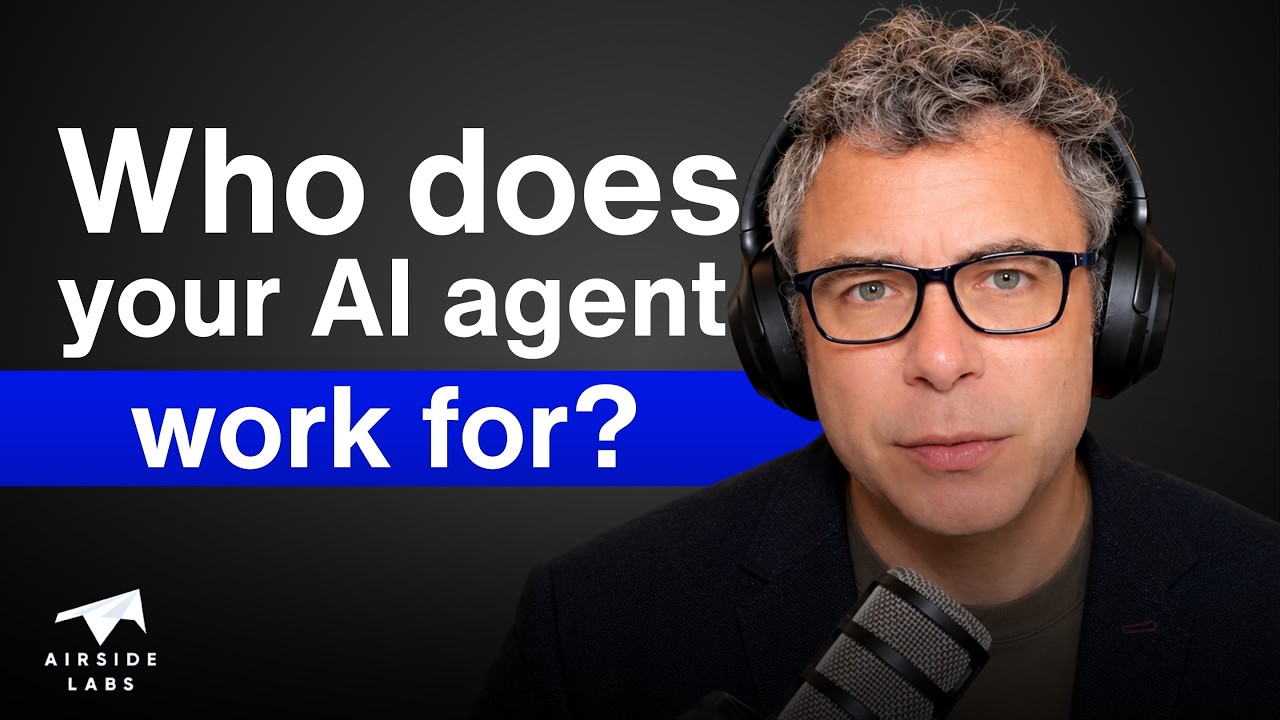
Trust as Infrastructure: Who Your AI Travel Agent Actually Works For
Everyone is racing to build the AI agent that books your trip, and nobody is building the thing that makes it safe to use one. Six guests from across travel and aviation, each working a different corner of the problem, independently arrived at the same diagnosis: agentic travel has a trust problem, not a model problem. Together they unpack who an AI travel agent really works for, how travelers would ever know, and what institution would need to exist to make it right when something goes wrong.
Show Notes
This themed episode brings together six voices who reached the same conclusion from completely different starting points. Eric Leopold, an IATA veteran of fifteen years responsible for the barcode on today's boarding passes, frames the core problem: travel collapsed the buyer's agent and the seller's agent into a single intermediary, a structure advertising would never permit, and one that AI could finally undo, because an assistant paid for by the traveler can genuinely work for the traveler. Christopher Olivares, solo founder of Elyo, a conversational flight search tool built in Paris, came from the OECD with no travel industry background and made a deliberate structural choice to stay bootstrapped and free of commissions, illustrating that supposedly free OTA platforms are not free at all: their costs surface in hotel pricing passed to travelers. Mike Putman, who launched one of the first online travel agency stacks in 1996 and now runs Custom Travel Solutions providing AI and human agents access to bed bank inventory, argues the market corrects itself and that OTA brands risk being routed around entirely as personal agents learn traveler preferences. Nancy Li Smith, who built the AI platform behind Meta's Ray-Ban glasses before founding social travel recommendation app Boop, found that unsourced model outputs prompt users to question legitimacy, and that social trust, meaning recommendations from people with a reputation on the line, consistently outperforms raw model quality. Fred Bean of HotelPORT warns that traveler fraud is already happening at human speed today, with fake hotel sites outranking real properties on their own brand names, and calls for a shift away from booking on price alone toward selling on attributes. Jim Hetzel, a career airline distribution and back office IT specialist at TWAI, closes the loop by quantifying what happens to look to book economics when billions of bots replace human searchers, and identifying the missing institution: an electronic equivalent of IATA providing identity, authority, enforcement, settlement, and dispute resolution for agent to agent commerce at a scale the industry has never seen.
Read the takeaways
Who Your AI Travel Agent Actually Works For
Read the small print on the big booking sites and you'll find the offer at the top may not be the one in your best interest, just the one that pays best.
Read the newsletter issueFull TranscriptClick to expand (2,808 words approx.)
Alex Brooker: Hi everyone, welcome to this week's episode of the Travel Tech Podcast. This is another episode where I take one idea that several guests reached on their own from completely different corners of travel and aviation, and let them each make the case in their own words. They'd never met, and they're not solving the same problem.
Right now, there's a race to build the AI agent that books your travel. Loads of PR, recent releases and upgrades are hitting the market. Everyone's building the agent, but nobody's building the thing that makes it safe to use one.
Over the last year, I kept asking people about this, and the answers kept landing on a similar word: trust. Not trust as a nice sentiment, but trust as infrastructure. Who does this thing actually work for? How would you know? And who makes it right when it goes wrong?
I'll start with Eric Leopold, because he framed the problem before AI was even in this kind of conversation. Eric spent 15 years at IATA. He is the reason there's a barcode on your boarding pass. And he points out something about travel that each of us has quietly accepted for decades.
Eric Leopold: Each advisor was trusted by the client and the supplier. But then I come to travel, and in travel they've merged both. One advisor, the travel agent, is advisor to both sides. And it happens a little bit in the open, because when you go to Booking.com et cetera, and they show the best offer on top — if you put your glasses on and read the small print, it says it may not be the one in your best interest, maybe the one where they get the most kickback. They don't say it as clearly as that, but that's the type of headache you have.
So you say, can the AI assistant become my personal trusted advisor for travel? And why could it work? Because I pay $20 a month to ChatGPT etc., I pay them for a service. The service I want from you is to find the best itinerary, the best flights, etc. And I don't want you to be polluted by advertising rankings. One advisor, two masters. In advertising, you would never allow it. You would have a buyer's agent and a seller's agent and they would negotiate with each other. In travel, we seem to be merging these two concepts together and nobody's really noticed.
Alex Brooker: Eric's question is whether AI changes that. He thinks it might, for a very unromantic reason. Back over to you, Eric.
Eric Leopold: Before there was a travel agent, it was an airline agent or it was a railway agent. They were an agent of the travel supplier, right? It was like a ticket office from British Airways, etc. And then that ticket office of the airline became multi-airline and multi-mode of transport, and became hotels too — "I can sell everything, so I'm like a representative of all those travel suppliers."
One thing that AI does — the gen AI, LLMs etc. — one thing that could change is, instead of having one intermediary that serves both sides and tries to do their best, they become again advisors of their respective buyer and seller. And I think that would potentially benefit both, because I saw it in advertising. It was very healthy to work like that.
Alex Brooker: If you're paying the assistant, the assistant works for you. If somebody else is paying it, it works for them. That's the entire argument. It's not a new one. It is just newly urgent with this new way of working.
Christopher Olivares is a solo founder in Paris who built a conversational flight search tool called Elyo. He had no travel industry background at all. He came from the OECD, so he loves data, but started his career wanting to be a diplomat. And he made a pricing decision right at the start that almost nobody in his position makes. Over to you, Christopher.
Christopher Olivares: It's not really visible to the everyday traveller, and yet they do pay for it in whatever impact that has on the price of their hotel nights, for example. The hotel might share some of that cost with the traveller, but they might also saddle the traveller with most of that cost. So it's not really free to use a free platform. From the time I spent studying economics, I would refer to the common saying that there's no such thing as a free lunch. When you go to major OTA one or two, you are paying for it, just not directly.
We launched the second version of Elyo in January — I did, because I maybe haven't mentioned, but I'm working on the project alone for the moment. Yes, solopreneur, which is, yeah, that's a whole experience in itself. It makes it nice to not have external investment and be bootstrapped, because I don't have to try to monetize that channel. So I just experimented a bit with the GDSs, found other solutions over time, third-party providers.
Alex Brooker: A structural choice, not a moral one. And it is worth noticing how new products in travel are actually built that way.
Now for the other side. Not everybody thinks this is a problem that you have to solve on purpose. Mike Putman launched one of the very first online travel agent stacks back in 1996. He now runs Custom Travel Solutions. He thinks the market sorts this out on its own, and that the brands should be more worried than the travellers. Mike.
Mike Putman: Well, what happens time and time again is the best consumer experience wins over time. So today, you might have a loyalty program with Expedia or Booking.com and you want to use that because you get some points and you get this or that, which is fine. But as all of this continues to evolve, and as these agents learn more about you — because that's a big piece of it. And when I'm talking about them, they're not people; these are pieces of software. But when these agents know that you've got kids, or know that you support Tottenham, or what have you, they can start speaking your language and then they can find the best route to get you — by route, I mean going to the supplier that makes the most sense.
And I think this is going to have, long term, if the brands are not really very careful, a good chance of them getting branded out. The days of, if you needed a hotel and you lived in Europe, you went to Booking.com — I think when you start having your own agents, and I've got agents myself, those agents are going to look at what's best, because Booking.com might not be the best way to make your booking.
What we're trying to do at CTS is be transparent with the pricing and source it every way that we can, because the agents today can't go to all the different bed banks, as an example, because they just don't have the infrastructure. The bed banks don't have the infrastructure to do it. And that may change — I'm sure it will change over time. But today, we are the solution that can provide an entryway for those agents to get to all those bed banks and bring back the best pricing.
But I think this is going to have a lot of effect, not just in travel, but in the way people purchase using their own agents. And if you look back over time, the best user experience, what's best for the customer, ultimately wins.
Alex Brooker: Brands getting branded out. If your agent knows you well enough, it stops caring which logo is on the booking. That's a very different prediction from Eric's, and I don't think we know yet which one is right.
But there is a third answer, and it came from somebody who's not building an agent in the way the other two mean it. Nancy Li Smith built the AI platform behind Meta Ray-Ban glasses before she founded Boop. When she started, she did exactly what everybody does — she pointed a model at the internet. Over to you, Nancy.
Nancy Li Smith: To make a decision on versus what we're seeing — at the beginning when we started doing this last year, you just witnessed this: when we didn't have this correlation of social trust, it's just like we're pulling the same thing as anybody else on the internet or any other AI player. And you just get this "oh wow, why did you do that?" People click through the experience like, "well, now I have to click through and understand why did this AI tell me to do this thing, and is it even legit? Where is the source of this? Is this the best option and choice?"
Alex Brooker: Human curation beats model quality. Not because the model is bad, but because a recommendation from a friend carries something a model cannot manufacture: somebody with a reputation on the line.
Which brings us to what happens when nobody has a reputation on the line. Fred Bean runs Hotelport, and this is already happening today to ordinary people reading an ordinary screen. Over to you, Fred.
Fred Bean: There are a lot of opportunities to fix things in this space for the travel consumer, who can be the subject of fraud, but also to make it easier for them to plan and manage and book their travel and get them what they need. Because right now, hotels are trying — attribute-based selling is a great example where, myself as a traveller, if I'm travelling for business, I want certain things. But if I'm travelling for vacation, maybe I want that bottle of tequila at check-in or a couple of other things. I'm not going to be so concerned about price; I'm going to be concerned about the experience that I'm booking. And our industry up to this point has been very price-centric.
Alex Brooker: A fake site with a full image library outranking the real hotel on the hotel's own name, and taking real money from travellers. That is today, at human speed, with a person actually reading the screen.
Now my old friend Jim Hetzel has done some arithmetic on what happens at machine speed. He spent his career in airline distribution, most of it on the plumbing — back office and IT infrastructure. And the number he cares about is called look-to-book. Is that metric dead? Is it still going? How many people actually look before they book? And does that change in the new agentic era? Over to you, Jim.
Jim Hetzel: Yeah, exactly. It's that question of who plays the electronic IATA in the middle to ensure the trust on both sides. And doing it at a scale that no one's ever seen before. It's one thing 100 years ago when agents would go office to ticket office. It's another thing going to a GDS — hundreds or thousands of travel agencies going to a GDS and that electronically being spread out. Now potentially you could have billions of bots.
Alex Brooker: Note what Jim just did there. He is a distribution guy in Detroit talking about bot traffic and cloud costs, and the thing he reaches for is IATA. Eric Leopold spent 15 years there. He's never met Jim. He reaches for the same institution from the opposite direction. Here is what he says it would have to do.
Eric Leopold: Give a number and register it in the system and say, "this is a trusted agent, so we can work with that one." In the internet world where there's no central authority like that — on the web, you go to easyjet.com and you say, okay, looks like the real airline. Now, if it's in an exotic country that you don't know and you search on a website you don't know, how do you know it's the real website or the real airline? Or if it's a travel agent, how do you know it's legitimate? And how do you know the ticket you get is valid — for an airline, for concerts, etc.? I want to go to a rugby game in an exotic country, I bought a ticket — how do I know they'll let me in the stadium? I have no idea.
So that's what I mean by trust. One element is identity — how you identify. Another part is how you get your money. Enforcement — where is the authority, how is it going to enforce, how is it going to work, how is the money going to flow, and how do you dispute? If something goes wrong, how do you manage disputes? All of that.
And that's interesting, because each time I see a post on LinkedIn, they say, "oh, I spent two hours last night and I vibe-coded a travel agency and an airline system and a whole end-to-end thing." And I say...
Jim Hetzel: In two hours, you don't even know what you're talking about. But that's what I like about this industry — it's so rich, so complex, so many things to consider. A lot of people — I'm 21 years in the industry and still discovering and learning stuff, so it's never ending.
Yes, it's going to be a challenge to build that end-to-end integrated platform: shopping, planning, booking, servicing, delivering, all of that. But once that's built, it's going to make a huge difference. You have your personal agent representing your own needs, knowing you, that is going to shop across a trusted network of agents representing all the parties. That is going to change everything. It will be amazing how it changes the experience.
Alex Brooker: Identity, authority, enforcement, settlement, disputes. That's not a feature you add in a sprint or from Claude Code. That is what IATA quietly does for the industry we already have. It took decades to build, and it's the only reason you can buy a ticket from an airline you've never heard of in a country you've never been to and be almost certain it will work when you get to the gate.
Six people from six different corners of this business, and not one of them told me the models were the hard part. Eric wants the buyer's agent and the seller's agent separated again — I tend to agree with a lot of what Eric says. Christopher built a company that way on purpose, and Mike thinks the market gets there anyway. Nancy found that a human you know beats a model you don't. Fred is already watching what happens in that gap. And Jim, who's never spoken to Eric, went looking for the same missing institution and could not find it either.
They disagree about who wins, but they agree completely about what is missing. Somebody has to be accountable. And in the agent-to-agent world we're all busy building right now, currently nobody is.
This episode was brought to you by Airside Labs — that's airsidelabs.com. I'm Alex Brooker. I really hope you enjoyed this content, and I'll see you in the next one.
Ep 33: ChatGPT Said the Visa Would Be Accepted. It Wasn't.
Ep 35: The Pricing Fight Inside Every Airline
Related episodes
Episode 36
Code Is Twenty Percent of the Thing
Alex Ragin, Amit Ganjoo, Leo Kotil, Jim Hetzel, Íñigo Valenzuela, Christopher Olivares, Iñaki Uriz
Episode 26
Nobody Would Fund a Human for This
Mike Putman, Anne Marie Pellerin, Yagub Rahimov, Fred Bean
Episode 23
Travel Inspiration Lives on TikTok. The Booking Still Lives in 47 Browser Tabs.
Nancy Li Smith
Every episode, in your inbox
One email per Travel Tech Podcast episode: the conversation, the key takeaways and the use cases worth building in aviation and travel AI.
Give your agent aviation tools
General assistants guess at aviation codes and get them wrong. Agent Tools give Claude, ChatGPT or your own agent checked answers instead. Free plan, no card.
Connect your agentAbout the Travel Tech Podcast
Hosted by Alex Brooker, founder of Airside Labs, the Travel Tech Podcast features authentic long-form conversations with leaders, innovators, and startup founders shaping the future of aviation and travel technology. No scripts, no sponsors, no sales pitches — just real conversations about building technology that matters.
Have a story from travel or aviation tech? Come on as a guest.