
Every episode, in your inbox
One email per Travel Tech Podcast episode: the conversation, the key takeaways and the use cases worth building in aviation and travel AI.
Why AI Is Slowing Down Experts Before It Speeds Up Work
AI adoption inside teams is not following the narrative most people expect — in some cases, experienced engineers actually become slower when adopting AI tools.
Show Notes
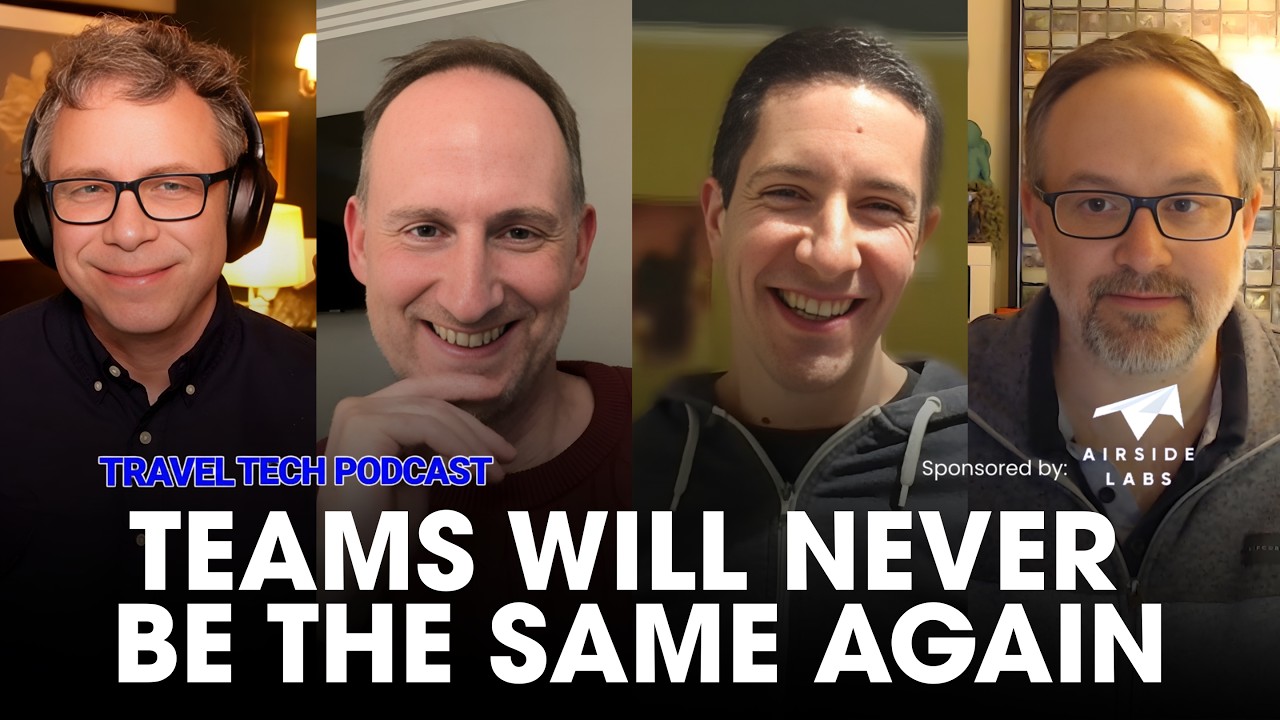
Alex Brooker brings back Ian Painter, Oli Deakin, and Adrian McKenzie to explore how AI adoption inside teams is not following the expected narrative. The panel examines how experienced engineers can actually become slower when adopting AI tools, and why trust, accountability, and organisational structure — rather than pure technical capability — create the real constraints in moving AI from experimental to production environments, particularly in safety-critical fields like aviation.
Read the takeaways
Why AI Is Slowing Down Experts Before It Speeds Up Work (Brooker, Painter, Deakin, McKenzie)
In this episode, I sit down with Ian Painter, Oli Deakin, and Adrian McKenzie, who bring deep experience across aviation data platforms and enterprise engineering leadership.
Read the newsletter issueFull TranscriptClick to expand (4,037 words approx.)
Alex Brooker: There was a study done by Metra, Model Evaluation and Threat Research. They're like a small independent AI group that does sort of research, like really focused research. And one of the things they looked at was they basically took a group of open source developers, and what was interesting was they found—I mean this isn't an overly accurate number—but they were 19% slower using the AI assistance. And what the sort of the theory of the research that comes out of it is that their brain is so well attuned to their normal ways of working, having been doing it for 15 years or 20 years, that actually they're context switching to use the AI tools now and it's actually killing their workflow. They'll never have used an environment where AI wasn't there. And that's actually the way their brain will work will be to automatically use the AI tools quite naturally. And in that it's just an interesting one.
Alex Brooker: So hey everybody, welcome back to the TravelTech podcast. I'm absolutely delighted to be joined again by Adrian McKenzie, Oli Deakin, and Ian Painter to discuss our topic of the week, which is how will teams and the humans in those teams be impacted by AI and its rollout across not just our industry in travel technology, but perhaps further afield as well.
And so just before we get into the discussion, I've got a few stats to share to sort of help kick us off. So Anthropic have done some really interesting research in their "The Future of Work" survey, and this is just one of the first things I wanted to sort of show to help get the discussion going really, and is the theoretical capability and observed usage by occupational categories. So what they've done here is—what Anthropic have done is they've taken the data that they see through the use of Claude and the Anthropic APIs. They look at the use cases that are being followed. What are people doing? What are they actually doing using those APIs? And then they've also modeled those roles and looked at the difference between what AI could achieve, what it can do in theory across a range of jobs.
Ian Painter: Yeah.
Alex Brooker: And then compared that with actually what are they observing? What are they seeing people using Claude, using agents in in reality? Obviously a big theoretical usage across management, business and finance, computer and math, architecture, engineering. And you can see some of the observed coverage also sort of do really well there. And the second one, just before I sort of put the question to the group, I'm going to share the next one as well.
This one is focused a bit more on agents. It's again from Anthropic, but I think it would be helpful when we talk about teams and the impact on people in the professional world—which domains are we seeing agents deployed as well? And so software engineering is obviously absolutely sort of dominated up here at the top, and then it goes all the way down: sales, financial accounting, cyber security, and then right at the very bottom, travel and logistics. And so we're obviously on the travel tech podcast, so I think it's quite interesting to look at that difference.
So if I put the question then to the group—if one of you'd like to kick us off—the impact of AI on teams given that sort of perhaps theoretical where people think it could be used and then actually what we're really seeing?
Adrian McKenzie: I guess when there's like—if you think about like when there's lives on the line, if you maybe think about like one analogy I was thinking about was like this evolution from like manually flying a plane to like fly by wire to like glass cockpits. And we're like between the pilot and the machine, there's been more and more automation added in between, and that's taken a long time—like 30, 40 years of trust being built. So like that's a very trust-based scenario, probably the most critical scenario. Now, how fast AI will get traction in that high trust environment is definitely not on the timeframes that Anthropic is talking about in that paper.
And I think that same—although interestingly like if you think about it, there are more lives to risk on the roads in theory, but we seem to have like sort of almost like drifted into that trust and there's not that much regulation behind it. So I think it's like it's that side of it. I think it's like looking at teams where somebody has to sign on the line. So I mean in some scenarios some people have personal liability as well. You know like personal liability—if you're installing avionics in an airplane there's corporate liability and there's personal liability that you're getting this right and you're putting the right stuff in. And you know even from a software perspective when you're getting into the DA and the software, there's like personal liabilities of stuff in terms of the software you're deploying.
So I don't know where that is on the time thing, but maybe we're just so used to being in quite a niche industry that you know, does that really matter in terms of like when you look at the broader AI traction? I'm not sure, but I think that's an interesting side of a team dynamic where you have to have accountability. But then maybe you know, if people are spending you know millions of pounds on software development, there's accountability there as well—like accountability in terms of you make the wrong decisions, you lose your job. So I think that's an interesting angle of AI in teams because like obviously the AI isn't accountable, so somebody somewhere is going to be accountable. So it's an interesting one.
Ian Painter: So that's—maybe we should explain for the viewers. So in regulated industries like aviation, you have this role as a System Design Authority, who they actually sign off the design of the system. This software is going to do what we said it was going to do against the requirement spec. And then there's a whole load of testing, validation, verification stuff. But it's a really interesting aspect to it, because that person, they've got to—and it's still this way, isn't it—wet signature those test records or those design documents and take responsibility.
And that's where I think we're moving to, right? Like I think that's the future even for say enterprise software, where I'm at the moment more than the assured AI—you know, assured sort of level—is that you still need to have that confidence. And so at the moment I think from a team perspective, what we're what I'm expecting of the people that I work with and our business is expecting is that within the team people are comprehending all of the software still. So any lines of code need to be comprehended by the team, probably at least two people in the team for any change: the person that's making it with the agents and the person that's checking it with the agents. But there's that still that comprehension.
I do think in the future from a team perspective we won't be required to comprehend the code in the future, but we will be required to comprehend how we assure the behavior of the systems. So it's a shift in comprehension in the future, but we're not there now. But in the future, I think that's what we'll—that's and that's how I think the—say from an engineering technology perspective, the change in what we expect of the people in the teams will move towards what Oli is saying. And it won't just be in these high assurance domains like cockpit software. It'll be in normal enterprise software as well.
Oli Deakin: Yeah. But Adrian, I think you make an interesting point in terms of like one of the things where it's more about that—if we just forget the niche of aviation and again we're focused a little bit on software, I'm quite keen to take it like a little bit completely out of software as well—but like it's interesting what you say in terms of like that idea of like comprehension. Because you're starting to see more and more I think that there's going to be more reliance on more senior people who can like who have got the experience. So as soon as you start going into like you need to comprehend the whole system, you need to comprehend what it's doing, you've got this bias that's sort of pulling you I think towards more senior people who can look at a whole system and understand an architecture and do that.
And I wonder sort of what the role is for like junior devs who spend like two, three years like fixing this little bit of code, fix this little bug, and you can see that just completely just going away. But then you sort of think like the way I see it is like well what's that going to mean? Because then you're not going to grow any senior people and you've got this scenario. And I think that's where you're going to start to see the first I think change in IT dynamics of teams. Like the idea of bringing a junior person on when an agent can just do all that stuff for you. You know, it's going to be hard for somebody to sort of say, you know, go fix this small bug like, you know, your first week like we used to always do. You know, get people in straight away, right? Go on to the production code, go fix this small bug, and you would give them like a small bug. Now, that's just going to all get done in the background. And if the job is more about comprehending things at a high level and architecture and assuring that something is fit to the architecture, what does that mean for junior people on that side of it? I don't know.
Ian Painter: And was that—that was in the Anthropic report, wasn't it? That was the bit—the bit that we're seeing now is that the graduates are like 14% decline on a graduate stuff. So I just think we need to reimagine what that—what that career path is for those people like it's a different learning journey, but it's still a learning journey. And we—I mean for assuming there's humans at all in teams—what I've observed is that a lot of engineers like to coach more junior people like it's not—they actually find it rewarding. So I just think they need to find it rewarding but express it rather than through code. It's through other things. So I still think there's that craft person.
Oli Deakin: So and I agree. I mean I think you both make good points. I think what I suspect is actually that the next generations will be much better at driving the AI tools to get good answers out. It's interesting. So I actually did a bit of homework before this one for a change. I used Claude, but there was a study done by Metra—Model Evaluation and Threat Research. They're like a small independent AI group that does sort of research, like really focused research into AI-related issues. And one of the things they looked at was they basically took a group of open source developers at different levels and gave them the task of basically using the tools that were provided and then also had a baseline of kind of the speed that they normally work at.
What was interesting was they found that the senior developers were about—I mean this is obviously an overly accurate number—but they were 19% slower using the AI assistance. And what the sort of the theory of the research that comes out of it is that their brain is so well attuned to their normal ways of working, having been doing it for 15 years or 20 years, that actually they're context switching to use the AI tools now and it's actually killing their workflow. Whereas what's interesting is I wonder whether the new—the kind of the new grads or the new up-and-coming software engineers, if you want to call them that, are actually will be starting with that workflow. They'll never have used an environment where AI wasn't there, and that's actually the way their brain will work will be to automatically use the AI tools quite naturally in that. It was just an interesting one.
Adrian McKenzie: Yeah. I just—sorry, I just wonder like when I remember reading that study, and for me doing sort of coding, building stuff myself, there was a real shift in November when the tools got a lot better. There's a big step change and then the same happened in December where literally day and night improvement where the models could understand at a much deeper level the code repository—like get it, actually get the understanding across a whole repo and solve bugs that were impossible two weeks before. And that's happened twice, November and December. So I don't know—it's hard isn't it with some of these studies when even if they're a few months old it might have shifted things.
I did have another stat to share with everyone, and this is just at the end of the discussion on perhaps on software stuff. But somebody's looked into like the global GitHub commits from Claude Code over time, and it's actually reached 4%, which might not sound like a lot, but 4% of global GitHub commits is actually quite a large number. And this is forecast to get up to 20% by the end of the year.
Ian Painter: No human in the loop for those commits. Is that what it implies?
Adrian McKenzie: Could be, yeah. Using Claude Code in its agent mode where it's actually made a change and actually pushed the commit.
Ian Painter: How confident are we that we should trust that?
Adrian McKenzie: I guess it might be pushing it for a review though, yeah. You don't know. I assume if it's committed—
Oli Deakin: Yeah, it could be. Yeah. So commits aren't—I mean it could be going into a branch and then have a pull request, have a being reviewed by a different AI before it's merged in.
Adrian McKenzie: That was the interesting thing. The other thing in this Metra study was they said that the average pull request size like was 150%. And then but also with a nine or 10% higher bug rate in the code. So it's interesting.
Ian Painter: Okay.
Adrian McKenzie: Much bigger, much more verbose code, and then as a result as you probably expect, if you're writing 150% as much code you're going to get more bugs. I mean I think that's what we're seeing from engineering. We're still back on engineering and we've drifted away unavoidably—the like the whole premise of agile engineering is to have continuous integration, continuous delivery, and that was about making as smaller commits as possible and doing it frequently in order to get feedback. Whereas with this you can make much larger commits because you can generate the code much bigger. It's a different way of thinking about it. But then that the cognitive load on the person to comprehend bigger changes is much harder as well.
Oli Deakin: And I did—what I did listen to a podcast this week on HBR IdeaCast. It was called—what was it called? "The Hidden Causes of AI Work Slop." The hidden causes of AI work—
Ian Painter: I like work slop.
Oli Deakin: It was really interesting. One of the concepts was what you were talking about before, Oli, a little bit. They called it a J-curve, which is you have to go slower before you go faster. So it was kind of those people that have engineered before when they're transitioning, they're going to be slower, but when they get it they will be faster. And so and that's partly maybe in the enterprise expecting productivity gains too soon and creating space for the learning journey to go on to actually work out how to do this properly.
Alex Brooker: Okay. Let's—should we should we tack back to the impact of AI on the humans and teams then? Maybe Ian, would you—were you keen to take us sort of away from perhaps engineering? Were you thinking of more knowledge work areas?
Ian Painter: Yeah, I mean I was thinking like the one thing that's really interesting is like that—again you look at the Anthropic stuff and what surprised me was there was quite a big spike on the sales side. But then I still think that like from if you look at like sales teams or marketing teams, like you still can't remove that element of like human trust and in the buying process I think. Like that side of it I can't see how that ever goes. I mean, we talked in one of our previous podcasts about AI actually being the buyer and the seller and infinitely trying things out, but I still can't see that as a future. I think like when you actually are at that last bit, I still think we're going to sell in a face-to-face scenario.
And I don't think sales teams from a point of view of like sales automation and Salesforce and like lead gen and all that sort of stuff—that's obviously going to be heavily automated and pretty much taken away, and I think sales people will love that. You know the last—all the experience we had in sales, like getting sales people to update Salesforce was like the last thing they wanted to do. So I think that side of it is going to be fully automated and probably already is now. I haven't seen sales for for a long time. But I think like the pitching and the building of relationships, I just can't see that going away. You know, whether you're selling software or whether you're selling kitchens or whatever, it's still going to be there, I think. Because it's a very personal relationship. You know, that's that very old saying: you buy from people, and I can't see that changing really.
And I think the same like—you look at like again, you look at the Anthropic stuff at the bottom end of it like construction and stuff like that. I mean, I guess it's like it's not AI, it's going to take that. I guess it's robots at some point, but that's probably a different podcast. But there's definitely a scenario where AI is—it's like again I don't know if it was in the Anthropic stuff, but it was like I read another article about saying that for the first time this is an industrial change that's affecting knowledge workers. Like previously all our automations have affected manual or commoditized blue collar, white collar—that scenario, have have reflected more manual work, you know, whether that's robotics or all the different machinery that we bought to make production more faster. Now, it's the opposite. It's affecting educated knowledge workers. So it's like the first time that we've got like a generational change that's going to impact a completely different type of the workforce. It's obviously—manual labor and manual workforce are going to be highly touched by this, and it's going to flip the other way. So anybody with a college degree and stuff like that is going to be more impacted.
Alex Brooker: Imagine it the other way. The other way around. What I'm thinking about is having seen some bits—and I can't remember which company, well, it might have been Google in Google Meet—that allow you to just send an AI avatar that sort of has a bit of your persona and has the conversations for you and captures the notes of the meeting and then comes out of the meeting. And I'm just wondering how it would feel as a supplier if you turned up to a meeting and your potential customer had sent just an avatar to have a conversation with you, and what how that would feel? Because it's interesting because that's like the flip side.
Oli Deakin: We're talking about the supplier and building those trust relationships. But actually it could happen the other way.
Ian Painter: Yeah.
Oli Deakin: Big company just, you know, procurement whatever. We just, we'll send an AI. It'll have a chat with their salesperson and we'll get back the report afterwards. And we'll do that to 20 different suppliers, get the information, and just make a decision based on what it tells us.
Ian Painter: I reckon next time we should, you know, as a management team, how would our jobs have been different?
Alex Brooker: Yeah.
Ian Painter: With AI.
Alex Brooker: Yeah. Actually running a business. That would be an interesting one to go through. Like thinking of us as a management team that would run a company, how would we have used it? I haven't even wrapped my head around that.
Ian Painter: No, it's a good question.
Alex Brooker: Yeah. Cool. Well, on that note, thanks very much, guys. Thank you Adrian McKenzie, Ian Painter, Oli Deakin, I'm Alex Brooker. This is Travelte podcast. Hope you enjoyed it. Thanks a lot.
Ep 9: How a Simple Barcode Saved Airlines $1.5 Billion and Replaced Paper Tickets
Ep 11: The Real Reason One Broken Machine Disrupts an Entire Airport
Related episodes
Every episode, in your inbox
One email per Travel Tech Podcast episode: the conversation, the key takeaways and the use cases worth building in aviation and travel AI.
Give your agent aviation tools
General assistants guess at aviation codes and get them wrong. Agent Tools give Claude, ChatGPT or your own agent checked answers instead. Free plan, no card.
Connect your agentAbout the Travel Tech Podcast
Hosted by Alex Brooker, founder of Airside Labs, the Travel Tech Podcast features authentic long-form conversations with leaders, innovators, and startup founders shaping the future of aviation and travel technology. No scripts, no sponsors, no sales pitches — just real conversations about building technology that matters.
Have a story from travel or aviation tech? Come on as a guest.