
Every episode, in your inbox
One email per Travel Tech Podcast episode: the conversation, the key takeaways and the use cases worth building in aviation and travel AI.
What's Actually Stopping Air Taxis From Taking Off
The US is about to publish rules that let drones fly beyond line of sight routinely — here's what that unlocks. Part 108, the FAA's upcoming rulemaking for beyond visual line of sight (BVLOS) operations, is set to change the economics of commercial drone flight.
Show Notes
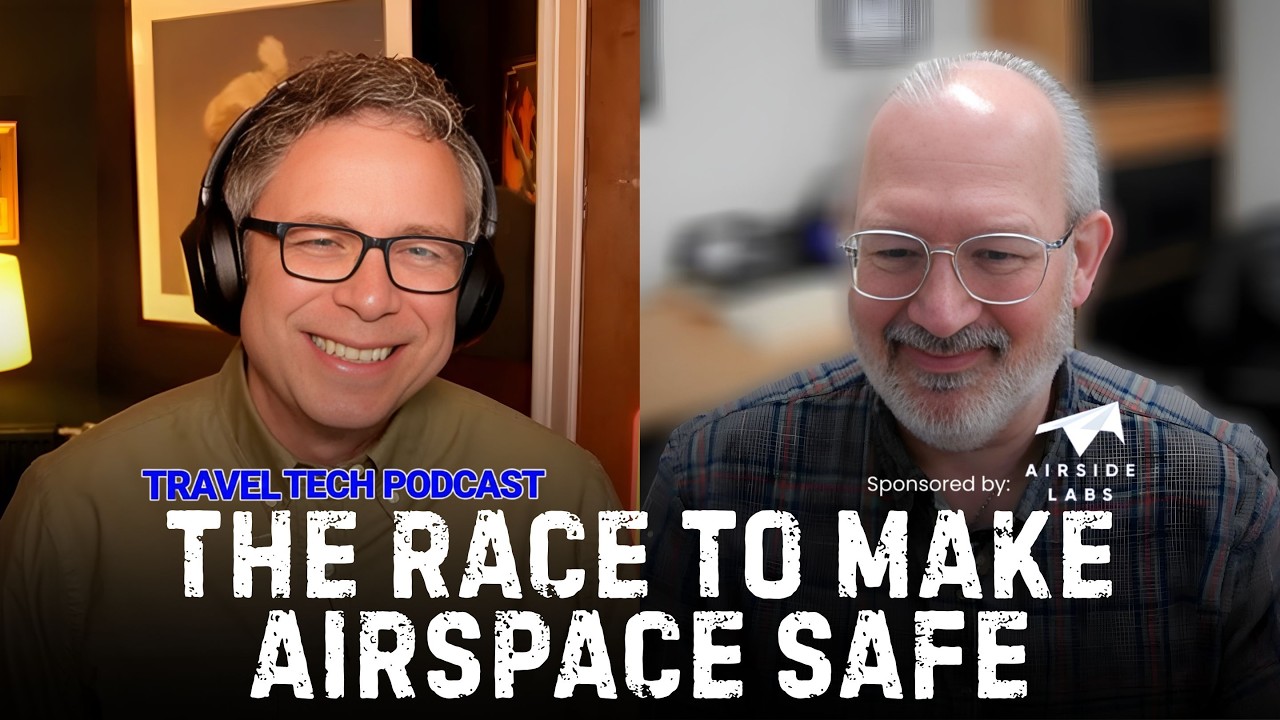
Kraettli L. Epperson, Co-Founder and CEO of Vigilant Aerospace, has spent years building the detect-and-avoid systems that make scalable drone operations possible. His focus isn't the drone itself — it's the invisible layer of data, sensors, and safety logic that allows autonomous aircraft to share airspace without introducing unacceptable collision risk. This episode unpacks what Part 108 actually enables, why detect-and-avoid is the gating technology, and what still needs to happen before drones — and eventually air taxis — can operate at scale. The discussion covers why autonomous flight is limited not by hardware but by the ability to safely manage shared airspace, how combining multiple data sources like transponders, radar, and telemetry is essential to build a reliable picture of the sky, the challenge of non-cooperative aircraft that don't broadcast their position, how FAA frameworks like Part 107 and upcoming Part 108 directly shape what operators can and cannot do, and what a fully integrated airspace could look like by 2035.
Read the takeaways
What’s Actually Stopping Air Taxis From Taking Off
The US is about to publish rules that let drones fly beyond line of sight routinely. Here's what that unlocks.
Read the newsletter issueFull TranscriptClick to expand (8,739 words approx.)
Alex Brooker: Hi everybody, Alex Brooker here. Welcome to the Traveltech podcast. This week I speak with Kraettli Epperson, the co-founder and CEO of Vigilant Aerospace. We talk about air taxis, drones, how do drones avoid each other, what rules are needed in the US to unlock routine flying, what does beyond visual line of sight mean, and everything in between. I hope you enjoyed the conversation.
This is brought to you by Airside. That's airsidelabs.com. And please don't forget to like and also subscribe to the channel. It really helps me out as this is a new project growing fast, but I really appreciate your support. And please comment below with your feedback. I love hearing comments and suggestions from the viewers and the listeners. All right, let's get into it.
Okay. Hey everybody, welcome to this episode of the Traveltech podcast. This week I'm joined by Kraettli Epperson, co-founder and CEO of Vigilant Aerospace. It's great to meet you, sir.
Kraettli L. Epperson: Very nice to meet you, Alex.
Alex Brooker: Yeah, thank you for coming on to the pod. Really interested to talk to you about lots and lots of different things, but I was wondering if we might start at the pre-aerospace days. I would just love to know how you got started in your career because I understand you are a bit of a serial entrepreneur.
Kraettli L. Epperson: Yeah, that is my background. So I started out in college, started out actually with some spare time, needing a part-time job to help put myself through college. And I went to a company that was nearby in Houston, nearby to my university and that had several people that I knew from my university and started took a reception job there really just to be able to do some homework.
And after I had done that for a little while and started supporting their marketing, they came to me and they said, "You know, we have this interesting problem. We have a request that somebody write a web app to pull in SEC documents." So, financial regulatory filings and documents that are used by traders and other people. And I had never done anything like that before. But I taught myself over a summer how to use the programming language that was suitable for their platform and wrote that application to automatically pull in a lot of SEC filings from the early internet.
And that actually got written up in PC Magazine, got them some national press and I really got hooked on building early internet technology products. And went on to found a couple of companies to host web applications. Ended up living in London for a couple of years. I had a company doing encrypted database hosting for major manufacturing and shipping companies throughout the world really based in the UK.
Came back and co-founded the world's largest academic digital library. So this started as Questia Media and then it got eventually acquired by Cengage. So we had about 300 employees and we had offices in Manhattan and London and Manila because we were doing scanning of tens of thousands of books and journals and negotiating with publishers. So we were providing license fees back to the publishers. And so that became a really big company and I was able to exit that and then started another company doing geospatial information systems for public infrastructure, rail companies, pipelines, wind farms, oil and gas exploration, just all kinds of things like that.
And then I ended up investing in some other companies. So I was involved in starting and running a couple of seed funds that were associated with an accelerator. And that did very very well and I was able to exit that and then some of the investors in that were the ones who ended up investing in this company Vigilant Aerospace. So that's kind of a brief encapsulated history.
I've always been involved in software, product design, development, have done a lot of hands-on, but now of course I do a lot of product design and then actually a lot of regulatory work. A lot of technical standards work, which is really important in aviation. And so we end up going to sort of the cutting edge of what you can do with aviation technologies right now while also keeping track of what the industry technical standards are. So that's how that's all sort of translated into what I do today.
Alex Brooker: That's fantastic. It's so interesting to hear that journey and particularly you started out as a builder. I think a lot of the other people we've been talking to on the podcast have started out engineering and building and solving problems for themselves. I'm interested in that step from tech and the early internet into aerospace. What was the driver there to take that leap into perhaps a highly regulated industry whereas before early internet was very different to that.
Kraettli L. Epperson: Sure. Yeah. Certainly it was really the wild west. And honestly a lot of what's going on with UAS and drones is also a very open frontier. There's a lot of pioneering work going on right now. So it's really fascinating and you know I'm driven by my curiosity to learn new things. And that's really how I ended up where I am.
But I would say that for example one of the companies the geospatial information systems company that worked with a lot of infrastructure companies has very direct overlap with what we do technically here because we're running advanced mapping systems for airspace management for example. So in fact a lot of the underlying technology has direct overlap.
But a lot of it just has to do with the interest in democratizing access to these advanced technologies. So, we're really working to make drones more accessible and advanced air mobility aircraft more able to have an economic impact. We're really bridging a big gap there. And that's really what I always focused on, whether it was creating large-scale digital libraries to bring things out of the physical world into the digital world and make it available to millions more people. Or whether it was building web-based geospatial information systems that anybody in an organization could use to immediately have access to data that was otherwise locked up in a basement somewhere, literally in many cases. And then to what we're doing now, which is to really unlock the airspace and make it available to be able to safely fly.
So I can tell you a little bit about the history of this company and kind of how I got involved.
Alex Brooker: Absolutely.
Kraettli L. Epperson: Please go ahead. Yeah, this might kind of inform that question a little bit. So, I started out being introduced to and meeting Ricardo Artega, who is a senior research engineer at NASA Armstrong in California. And he is a national avionics and aviation safety expert for NASA. And so they will fly things into NASA Armstrong that they need new avionics installed on or that they need fixed or adjusted or configured. And Ricardo is a national expert on doing that.
And so he had the notion a little more than 10 years ago that the industry and the world was going to need a way to safely track drones and to allow drones most importantly to track other aircraft and then to automatically avoid collisions, avoid all kinds of conflicts with other aircraft. And so he began pioneering that at NASA Armstrong and filed a couple of patents around how to do that. Initially with transponders. So ADS-B which is the transponder that aircraft that fly in controlled airspace in the United States and a lot of other places must use. So it has a very long range great utility. And then he filed another patent to add radar to that capability.
And we ended up meeting with Ricardo. He's a really inspirational guy. He started becoming interested in aviation safety growing up in Texas and started pursuing his pilot's license and then eventually became an engineer and joined NASA. But he had a very inspirational story and approach to how to do autonomous aviation safety.
And so we ended up licensing those two patents and that formed the basis for the product at this company. We built a commercial product initially and then we also now have what's called a dual use product. So it can be used for defense where it can be used in the commercial space. And it's based on those patents but equally important based on a lot of the algorithms things that the FAA publishes regulations and technical standards so that it's more readily usable.
So that's kind of our arc is we started out working with Ricardo at NASA. I co-authored a couple papers with Ricardo to get us started using the basic algorithms and the claims in those patents to describe how you would do collision avoidance, detect and avoid as it's called in the industry for drones or UAS or advanced air mobility. And then that gave us a great launching point to get out there and start actually building this technology in the field. So that's really the history of this company.
Alex Brooker: Yeah, it's an amazing story. I was wondering if we could just dwell on the detect and avoid challenge for a minute. Why is that a hard problem?
Kraettli L. Epperson: Sure. Yeah. So it represents a big technical gap in the industry right now for both UAS and for advanced air mobility. It is crucial for the industry to be able to grow, for there to be ready to use, standardized, compliant DA systems that allow drones to automatically sense where other aircraft are to track them, to predict a trajectory, and then to make a decision on an avoidance maneuver if that's necessary. So that's the technical gap that we fill.
There are companies that have designed systems specifically for their large drones. For example, some defense companies and there are companies that are working on this in advanced air mobility. But there are very few companies that are approaching it from an agnostic point of view of how do you put this on any aircraft that needs it? Any drone manufacturer from small to large, how are they going to solve this problem?
And so what unfortunately a lot of them have to do, you know, kind of before we got started is you have to buy the equipment, write the software, integrate it, test it, get it validated, and then you might be able to use it. So it's a big science experiment. It's expensive, it's risky. And so we've invested the time and money to solve that problem. And so that's the gap that we're filling in the industry so that we're the leading independent provider. So we don't have a particular aircraft that we're building it for. We're building it for your aircraft, whatever you might need.
Alex Brooker: I see. And so that's what we're focused on really.
Kraettli L. Epperson: And so it's a fascinating sort of step forward I think because even or in the UK right now if you want to fly a drone and go beyond visual line of sight is a big deal. BVLOS. So going beyond visual line of sight is a very big deal. In the UK, we still need to have a temporary danger area or a restricted area. What's the situation in the US and have what's your involvement in sort of pushing the boundary there in terms of setting the rules of the road as it were?
Alex Brooker: Yeah. So we started this company in 2015 by licensing the initial patent from NASA and then we were very fortunate that in 2016 the US published what's called the Part 107 rule. So the FAA published a new rule that allowed you to fly small drones at low altitude commercially under that rule. So you didn't have to get a special waiver exemption. You didn't have to get what was called the 333 exemption anymore if you were going to fly a small drone at low altitude. And so that revolutionized the industry, really created the commercial industry in the United States.
But that rule required you to fly within visual line of sight, meaning you as a drone pilot of a small drone, so leaving aside sort of defense operations, which tend to use air traffic control. They're much larger and they have lots of people involved. If you're flying a small commercial drone, you really have to fly within line of sight. You have to be able to see it or you can get a Part 107 beyond visual line of sight waiver, but typically you've got to have the safety system. You have to have a team to do that. And we have been involved in operating under several of those. Some of the early pioneering work in onboard, detect, and avoid, we've done and I can tell you a little bit about that later.
But that's how the industry evolved. And so what is exciting is a few years ago the FAA realized and everyone really realized that if the industry was going to advance the US operators were going to need to fly beyond visual line of sight. Go and inspect a pipeline, inspect a large wind field, farm, inspect large agricultural fields, rivers and dams are really important for drone inspection and to do all that kind of work. And then of course basic search and rescue and fire and flood response, you really have to be able to fly beyond visual line of sight safely.
And so the FAA put together what they call an aviation rulemaking committee. So the FAA ARC process is that they'll pull in people from industry, they'll pull in subject matter experts, they'll pull in regulators, and then they will sit down and put together a set of recommendations for how to write a new rule to enable something. So, there have been rules for remote ID, which is basically a license plate, a radio license plate on your drone. And then there is a rule now that is in a draft form for going beyond visual line of sight routinely. So, you don't need a special waiver. You'll be able to fly beyond the visual line of sight of the pilot.
And so, I served on that ARC. So, I spent time in 2022, for example. It lasted a couple years and then they drafted the rule after that to help put the recommendations together. So there were 89 people throughout the United States that were on that ARC. And now the FAA has published a draft rule that they're calling Part 108 and there's an accompanying rule for the systems to support small drones typically on the ground called Part 146.
So those are drafts now. There have been comments made on those drafts and they expect that by the end of the year those will be published and effective at some point in the future after that. So that the US market for small UAS up to 1,320 pounds and 25 foot wingspan will be able to fly beyond visual line of sight. So it's a really exciting rule. It's a new revolution the way Part 107 created the commercial industry.
Alex Brooker: Part 108 will really expand that industry dramatically. And so in terms of that market expansion, it must unlock a huge number of those use cases you've started to describe. So river surveys, dam surveys.
Kraettli L. Epperson: Mm-hmm.
Alex Brooker: But what level of autonomy are we talking about with the drone itself? Is it a mission plan that it will go off and do something autonomously or are there remote pilots involved? How does that work?
Kraettli L. Epperson: Yeah. So, the new rules are an evolution of the Part 107 in which you had a pilot in command and you had a certificated pilot that was required to operate the aircraft. Under Part 108 and Part 146, there's a movement towards more autonomy with the idea of an airspace or a flight manager, but there's an expectation that there will be a lot of systems involved that there will be a lot of automation involved particularly with Part 146 which creates the idea of a data provider, an ADSP, so basically an aviation data supplier service provider.
So those rules are designed to allow a lot more autonomy. And it's expected that you will have highly autonomous drones flying commercial missions over long distances under this new rule.
Alex Brooker: Right. So in terms of getting to a longer wingspan and if these are - I suppose they could be - they're not quadcopters anymore, the range can get very high I suppose. What sort of ranges are we talking about that would be enabled by these changes?
Kraettli L. Epperson: It's really going to depend on what the manufacturers are able to achieve. There are a lot of people working on that but certainly many kilometers. I can tell you about some projects that we're doing particularly for infrastructure to set up systems. But it's expected to be you'll be able to fly aircraft for an hour or more under these rules and eventually a lot longer than that. You're still limited by altitude but it's a pretty large size but at that size there's a lot more work you have to do on safety systems.
So when you get up into those larger sizes, there's a matrix that determines what you have to do. And so as you get into those larger sizes, there is definitely more safety infrastructure both on board and on the ground that you would typically utilize. But could be many, many kilometers.
Alex Brooker: I see. Wow. And what sort of altitudes are we talking about? Is there still a big separation between the sort of commercial air travel in controlled airspace and the altitudes we're talking about?
Kraettli L. Epperson: Yeah, it's still expected mostly to be under 400 feet. There will definitely be exemptions and there are cases where you can fly within a certain number of feet around a building or a bridge, other things that may take you well above that 400 feet. But those are obstacles that you use to help shield your operation. And that's actually already being done under Part 107 and sometimes with special waivers to be able to use that shielded infrastructure.
So this is mostly still low altitude. It is still outside of regular air traffic. But it's definitely a proving ground for larger UAS that will begin to move up into regular controlled airspace into eventually Class A airspace over time.
Alex Brooker: Yeah. No, I see. And I guess enabling a bit more of a routine flying - does that phrase the question in the right way? So, when you can fly in a routine way, what does that unlock? How does that help the industry grow?
Kraettli L. Epperson: Oh, absolutely. So a lot of the change is that it creates a lot of certainty. It matters what the rule is but it matters even more that you know that there is a rule and you can build to the rule, you can invest to the rule, you can build infrastructure that complies with the rule and it complies equally important to the reference industry technical standards. So the rules have a tendency to point to say you can comply with this rule and prove to us that you comply or you can use this accepted industry technical standard and if you comply with that we know that you're complying with the rule. Right?
So by having a new rule like this you can invest in designing new aircraft. You can invest in the data networks, in the payload systems, and really build a business with some level of certainty that you'll be able to operate every day under these rules. And as long as your aircraft meets the need, you can really build a business around that. And it's absolutely necessary to have that certainty in order to build a business around UAS.
Alex Brooker: I see. So it gives you that concrete foundation when you can build up that business case, that pitch, you can secure further investment and all those things that happen in the conventional aviation world of how much money can we make by launching a service between this city pair. Suddenly...
Kraettli L. Epperson: Absolutely.
Alex Brooker: ...those analogies all can start to work in UAS. Oh, that's fascinating. So let's maybe actually before we get to the big vision, I want to go back slightly and go back to detect and avoid and talk about that a little bit if you don't mind. I'd love to know a little bit more about what you and the team have been developing within Vigilant Aerospace and how you've approached some of the different data feeds and data fusion challenges around detecting and avoiding each other.
Kraettli L. Epperson: Yeah, sure. So we have a product line that's called FlightHorizon and we have both ground-based versions of this and we have onboard versions. So we started out commercializing this technology with ground-based technology. So we integrated with transponder receivers into our software. We wrote software so that you have a display of the airspace. It's a 3D display of both your own aircraft. So we pull in telemetry from your aircraft and we can do that either on board or on the ground. And so we always know where your aircraft is according to where it knows and thinks it is.
And then we also pull in information from ADS-B transponders. So we will have receivers or we actually build entire networks of receivers. And then we can pull in FAA data. So SWIM is one of the systems that the FAA provides to publish that data. And there are new emerging systems that the FAA is going to start using to publish. We'll pull in private data feeds. We've done that with defense industry where they have their own additional data about where aircraft might be located and then we'll display all of that. In some cases we also have large radars and so I'll tell you about some projects that we've done with that.
But fundamentally what it does is it pulls all that data in and it does a correlation process to say we see this aircraft track and we see it on radar. We see the transponder and we know it's not us because we have our own telemetry and so we're going to track that and we're going to track it first with ADS-B if possible. If it doesn't have ADS-B, it is non-cooperative. We'll track it on radar and then our system in a fraction of a second will perform a calculation on the trajectory. So it'll say this aircraft is traveling in this direction and that will or won't intersect with what we call a well-clear distance around our drone or UAS, right?
That well-clear distance is really important because that's the safety distance that the drone operator by regulation is required to maintain from other air traffic, right? And so the system calculates that based on that trajectory and if there is a potential conflict, it then provides what's called a resolution advisory, which is an avoidance command, right? And so it'll send it to the autopilot and to the pilot and it'll say you need to turn left, descend, and speed up in order to maintain your well-clear distance from this other aircraft. Right?
So we write all of the algorithms to do that. We use something called ACAS X which is a successor to the TCAS system from the FAA. They have published algorithms on what your maneuver should be. So we don't have to guess at which direction we're supposed to go, how we're supposed to go. We don't have to debate that with the FAA or anyone else because we're using those algorithms that the FAA has published and are very widely used and those are embedded in our software whether it's the ground-based or the onboard version.
So that's what we do. So we have a team that specializes in software development, mission critical software, algorithmic work, a lot of exotic geometries in some cases, and then we do all of that correlation work across targets to say this is one aircraft we know where it is it is cooperative or non-cooperative and it is predicted either to encounter our well-clear distance which is basically like a hockey puck - it's a flat cylinder around your aircraft. And we do that calculation continuously across everything we can see.
And then as I said, we'll either send it to the autopilot, particularly if it's the onboard version. That's the first step. And it'll create a new waypoint. It'll say you're going to have to go left and you're going to have to descend, right? And then we'll also tell the remote pilot that that is what the recommendation is. And if it is a situation where the remote pilot has control and needs to do that - the autopilot doesn't have the authority to do it automatically which is often the case - then the remote pilot can accept or carry out that maneuver. So that's the fundamentals of what we do and how our system works. And I can give you some example projects if that would be interesting.
Alex Brooker: Well, I'd love to talk about a little bit about the uncooperative airspace users. On this side of the pond - I've been very conscious of my viewership in the UK - it's taken a little bit longer than perhaps we would want it to to establish sort of full electronic conspicuity rules and have cost effective ways for everybody, all the airspace users to be conspicuous. I was wondering what's the situation in the US and how does that work? What's it been like working with the sort of airspace users in some of those projects in terms from the conspicuity side and perhaps the uncooperative users?
Kraettli L. Epperson: Yeah, so I will say that a lot of the work that the FAA is doing right now is an effort to balance the needs of all the different airspace users. That's always the case, but particularly when you have new entrants, when you have more autonomous aircraft, when you have a number of aircraft that is expected eventually to dwarf the number of takeoffs with autonomous aircraft versus crewed aircraft, then you definitely have things that you have to balance, things that you have to think about.
So of course in the US, if you fly in controlled airspace, you're required to have a transponder. You're required to be interacting essentially with air traffic control via your transponder and other ways. And so there is a large group obviously of cooperative aircraft that are typically using those transponders and are most of the time relatively easy to detect and track because of that. And of course there's a small number in the US as well of non-cooperative aircraft that never touch or go into controlled airspace and so they do not have to have a transponder - farm aircraft, ranch aircraft, some private aircraft that might just not land at typical airports, you would end up in a situation where there are a number of aircraft that just don't have that transponder.
So in the Part 108 proposals and other discussions there is an idea of having a very low-cost, low-powered, maybe even rechargeable vehicle-to-vehicle transponder that's not intended to interact with air traffic control but that can provide that conspicuity for that small aircraft in uncontrolled airspace and give them that visibility for safety. There is definitely work and discussion about that and I know the FAA is working hard to try and balance that and how that might become a requirement keeping in mind that the Part 108 rules for example and the Part 107 before it was for very low altitude flying right an airspace in which even a lot of those non-cooperative aircraft don't typically fly right they're not going to fly below 400 feet unless they have a specific purpose usually and so it gets to be a smaller and smaller group that you're worried about needing that additional conspicuity because they might be interacting with drones, right?
So, we spent a lot of time on the Aviation Rulemaking Committees kind of thinking about that, thinking about who needs to fly in that space. A lot of it's inspection aircraft. Some of those inspection aircraft, for example, are likely to be replaced by drones because that is very dangerous work and drones do that very well. So there's actually a safety trade-off there that you improve national safety and you decrease the number of accidents and problems because you are using drones for some of that high-risk work. So if you look at the final report of the ARC, there's a whole discussion about that.
But when we end up supporting operators that need to have non-cooperative detection, which is really kind of what you were asking about, we typically are going to use radars to do that. We can either use small radars that are portable on the ground. We have for example in western Oklahoma at the Clinton Sherman Airport which is the Burns Flat Spaceport - which is pretty cool - we have thousands of square kilometers that we surveil with a group of seven radars. They're large trailer-based radars and there are aircraft developers that use Burns Flat. There's training that goes on there and increasingly there's a couple of spacecraft that have been announced that are going to be launching from there. They're autonomous spacecraft, right? So that's really exciting for us to be able to track those.
So when you have to account for the safety and we're really in the business of crewed aircraft safety, right? That's really what our system is for is to keep those pilots and those aircraft safe. You typically are going to add a radar to your system. That's really the standard right now. But as the rules develop and the regulations develop, increasingly we do expect that that's going to be a shared responsibility where crewed aircraft do have a higher level of conspicuity that is required and exercised and transmitted out so you can see them without pointing a radar at them.
Right? So that's kind of where we are right now in the industry and it's expected with the publication of part 108 and part 146 which is for the infrastructure later this year that those issues will be balanced in the way that that rule is written.
Alex Brooker: I just wanted to ask you about on the radar side. I've never seen a sort of a small radar that would perhaps fit onto a drone. Many times when I think of radar in my mind I think of the great big spinning things that I've worked on defense ships in in past earlier in my career so I'm quite familiar with big radar. How small can they get? I'm thinking of the smaller drones and we're talking about having a radar on on the vehicle itself. A previous guest we talked about the challenges there that perhaps radar were too big or too heavy right now. But is that not the case or where are we with the sort of size and weight aspect for the radar sensor?
Kraettli L. Epperson: Yeah, so we typically for on board are going to use a model of radar called an EchoFlight from a company called EchoDyne. There's two or three companies that are working on or developing small radars. The EchoFlight is widely used and so that's the one that we usually start with if you have a need for an onboard radar. They are about that big. So they're about that big. They're a little thick, but they're about that. So you know, multiples of the size of a cell phone, but they weigh about 1.8 pounds. So that's that's about what they weigh.
And we have them on drones down the hall. Like we literally are flying them around with drones. We've done that under FAA contract. We've done it for the US Air Force. They're typically for what we call group three, four, and five size of aircraft. So slightly larger drones. There are some systems for what are called group two, which is where you think about sort of a large but small drone, the size of kind of a coffee table or smaller. Okay. That's kind of the the group two is is just kind of at that size. And we do fly those small radars on those sort of group twos if it's pretty large group two and if you get below that the radar is not very viable right it's really too big at this point.
Yeah there are other technologies that are emerging but for small radars that's what we use and as I say it's about that big.
Alex Brooker: Okay.
Kraettli L. Epperson: The other thing of course is ground-based infrastructure right so you end up with larger radars that have long ranges that are also coming down in price and quite sophisticated at this point. And then what you were describing is more of like an airspace surveillance radar which are typically used for air traffic control and they tend to be quite a bit larger and more expensive.
We have integrated with some of those. They don't typically go all the way down to the ground though. They're not really designed for providing safety at the kind of 0 to 400 foot range. At least the ones at airports are not designed for that. So they're good for kind of in route and for tracking terminal operating areas when you're bringing aircraft in and landing. But really to cover that lower altitude area for drone safety you typically have to have a different kind of radar.
Alex Brooker: And so is that like a key requirement that's going to last multiple years into the future? Do you think that sub 400 ft coverage is there is there going to be an ongoing need for small ground-based sensors?
Kraettli L. Epperson: So I mean I can't tell you exactly what's going to happen. I know that part of the discussion that we've had in the ARC and that is evident in a lot of the drafting of part 108 that the FAA has published has a requirement for active DAA essentially with some form of non-cooperative detection for high population density areas. That's one of the criteria that's written into part 108. So, anything where the risk to people on the ground to buildings or you know higher airspace classifications where you have more air traffic those are going to require more detect and avoid and non-cooperative detect and avoid capabilities right and that's the way it's drafted now.
In other places though the way that it's drafted is you will be able to use ADSB only in certain circumstances and of course that's very enabling for the industry because it means a very low sort of technical requirement. We have a system that's about that big that goes on a group one or two drone that provides that full functionality on board. It's one of the things we specialize in. We developed a military version of that and now we've developed a civilian version that we actually have some contracts for demonstration and testing of that.
And so for those types of situations where you don't need to have non-cooperative, right? So, some form of radar, camera, acoustic. People do use all three of those to detect other aircraft. Our systems tend to be radar focused because we're typically using aircraft that are fixed wing and they have to fly through a maneuver and so they actually need to know exactly where that other aircraft is so that they can take a maneuver. But if basically your drone is just going to to go down to a lower altitude and hover until the aircraft passes, you may be able to use some of those other systems as well because you don't need to know exactly where the intruding aircraft is. So we see those in the industry as well.
That's just kind of an overview of kind of what's going on right now, but we're really at a pivotal point in the development in the US at least of how these rules are going to work. And there is huge interest in enabling this industry. And so continuity is part of that. Very low altitude enablement so that drones are allowed to fly at low altitude very routinely is an important part of the sort of the goals of these rules.
Alex Brooker: I mean it's fascinating. I didn't realize that acoustic sensors were involved as well in terms of picking up that location.
Kraettli L. Epperson: Yeah, there are some companies that are using acoustic. You know, it sort of gives you a vector. It says, well, we believe that there's an aircraft over here and so we need to go down, maybe we need to land in a safe place and wait for that aircraft to pass by. There's definitely been a lot of a lot of R&D done around those types of operations.
Alex Brooker: Oh, fascinating. And in terms of then getting to perhaps the future vision or the big vision of what we saw on the Jetsons, the flying cars and air taxis. I guess what we've been talking about is is perhaps one step towards that. What what in your view are the remaining steps before we see something like a Trip 7 and a helicopter and a news helicopter and a small drone all in the same perhaps not quite the same airspace close together but in the same in the same airspace operating safely together.
Kraettli L. Epperson: Yeah, we think a lot about integrated airspace. In the US the FAA and the industry have all said trying to segregate and trying to separate all these aircraft is is not really a good long-term strategy. They need to be able to interoperate. They need to be able to communicate and deconflict from each other. And so as we move forward we are very excited about advanced air mobility. Right? So, we've worked with companies that are developing air taxis, larger cargo drones. So, the part 108 and part 146 are stepping stones. But the FAA is also making advancements on enabling those larger aircraft.
They have started developing rules and protocols for how they'll be controlled, how they'll interact, how they'll land, how they'll recharge. A lot of thought about sound, noise, environment, electrical infrastructure, you know, other technologies to enable the propulsion of those much larger but much higher autonomy advanced air mobility aircraft. And in fact here in Oklahoma City where we're based, the Mike Monroney Center has the new VPAR which is a FAA investment in developing the the kind of a vertiport model for how you would operate those electron usually their eVTOL so electric vertical takeoff and landing aircraft.
Alex Brooker: Okay.
Kraettli L. Epperson: So there there's lots of work going on around that. And we've been engaged by both civilian commercial and defense organizations to develop and to model and then develop DAA systems mostly using small radars multiple small radars to enable those aircraft to have highly autonomous deconfliction.
They'll be flying between that kind of 400 foot up to when you get into kind of higher altitude controlled airspace in that kind of middle layer for doing things like air taxi work, right? Where you're going to take off somewhere quite quickly to somewhere that you need to be and land or delivering, you know, medical supplies, air ambulances, moving critical parts around, you know, that sort of thing. And so that's also going to have a very high degree of autonomy. And the FAA is moving towards that with part 108, part 146 as a stepping stone into what advanced air mobility will look like in the future.
I don't know if that answered your question, but that's kind of what we see going on right now and we have some exposure to that as well.
Alex Brooker: No, super super cool and it's so interesting. Just just sort of coming to my final couple of questions. Imagine we are in say 2035 a tourist is visiting should we say Oklahoma City maybe that would be appropriate. Now if they want to see a tour of the city via air taxi would they be would they notice your technology? Is it part of the invisible infrastructure? What's what do you imagine their experience is like as a traveler or a tourist in 2035 Oklahoma?
Kraettli L. Epperson: All right. Well, I'll pull my crystal ball out and you can you can tell me I'm completely wrong in in nine years, but you know, so I I will say one of our mottos is there's no autonomy without autonomous safety, right? You really so you you can design an aircraft that can do a lot of things whether it's a drone or whether it's an air taxi it can have a high degree of autonomy you push a button and you go where you want to go and and it goes there but right now one of the big gaps is it has to do so safely right so that's really the thing that we think about all the time.
But it is relatively invisible technology right. It's not supposed to be noticeable it's not supposed to be anything that you think about when you are using one of these tools. It is built in, it's baked in, it is a part of your process, it's part of your operation, it's part of your operating system and it is going to be there looking out for you, looking out for those other aircraft. So with our focus on very highly autonomous detect and avoid, the idea is that it's constantly monitoring whether you're thinking about it or worrying about it. And that's the big leap that's going on in the industry as you move from DAA systems that have multiple people involved and people looking at screens and calling each other, radioing each other to a system where it's all on board. It takes place in a fraction of a second because it's one wire between two systems and then the system does the calculation.
Scaling that up so that technology and those functions are available seamlessly across the whole system whether you have access to ground infrastructure so radars network or not. So you have a fully onboard system and you're carrying just what you need to be safe in the place that you're flying. That's the future, right? And so, you know, our goal is to be embedded in all the places that we're needed. As that quiet background safety that's just running all the time. When you turn the aircraft on, it boots up. It self checks. It makes sure that it can see what it's supposed to see. It'll stop you. If if it can't, it'll say, "Hey, we got to reset this. You need to have a technician look at this." Like, this is literally what our systems do now. Like, they do these kind of self checks. As soon as they're plugged in, as soon as the aircraft is turned on, they boot up and they start self-checking. They make sure that they have all the connectivity that they need. They make sure they have access to the sensors. They run heartbeat checks on all the sensors. Like this is literally what we do today.
So we want that to be that invisible continuous safety technology that is just running as a part of the way the aircraft functions. And so you know 10 years from now that should be completely embedded and a completely you know invisible but omnipresent part of the way that the whole aviation system operates. So that's how we think about it.
Alex Brooker: Yeah. I mean it sounds pretty cool and it's certainly an exciting exciting time and exciting year. I just wondering to to finish off are there events coming up for Vigilant Aerospace Systems? Can people see you at any any exhibitions or shows coming up or or how can they perhaps reach out to you?
Kraettli L. Epperson: Yeah, absolutely. So, we will be at AUVSI Exponential in Detroit this year. So, that's just a few weeks away. It is a very large show. A lot of people come both domestically and internationally to that show and and we will be there. We'd be happy to meet with people show you some of our technology have a discussion about how it might be helpful to what they're doing. And so that would be the next probably biggest opportunity to see us. And then we also on our website maintain a list of other smaller shows that we're going to throughout the year. It's typically pinned to the top of our blog, pretty easy to find and we update that every couple of weeks. So, wherever we're going to be, we'll have there. But the next really big one that a lot of viewers may be involved in would be exponential. We just went to Heli-Expo, which is the really kind of the helicopter show and and we do a lot of of shows like that. So the next big one is Exponential.
Alex Brooker: Oh, that's fantastic. And thank you so much for for joining me on the on the pod Kraettli. It's it's been great talking to you, learning about you and your business. Wish you every success and what in what looks like it's going to be a very exciting year as these unlocks and and rules start to come into place to enable a bit more routine flying.
Kraettli L. Epperson: Yes, absolutely. We're we're really excited about what we do. We really enjoy it. We get all the best toys and we love to talk to people that. So, thanks a lot, Alex, for having us on.
Alex Brooker: No, it's been awesome. I really appreciate it.
Ep 11: The Real Reason One Broken Machine Disrupts an Entire Airport
Ep 13: The 5-Minute Build That Breaks Traditional Travel Tech
Related episodes
Building AI for aviation or travel?
Airside Labs builds working AI prototypes on your data and tests them against the edge cases of your operation. Our agent tools give Claude, ChatGPT or your own agent a catalogue of 6,700+ aviation AI use cases and aviation lookups it can trust.
About the Travel Tech Podcast
Hosted by Alex Brooker, founder of Airside Labs, the Travel Tech Podcast features authentic long-form conversations with leaders, innovators, and startup founders shaping the future of aviation and travel technology. No scripts, no sponsors, no sales pitches — just real conversations about building technology that matters.
Have a story from travel or aviation tech? Come on as a guest.